

Ever since the worldwide catastrophe that was Covid-19, a multitude of areas in everyone’s lives were permanently affected: socially, economically, and mentally. However, the lingering effects of corona-virus are also heavily felt in today’s education system. This is evident through the apparent decline regarding in-class participation from students. Not only has the willingness to participate in class died down since then, but students are maintaining grades far below the minimum of what is expected of an average student. Where students once exuberantly raised hands and merrily scribbled away on chalkboards, many kids now scoff at the concept of simply answering a question, and struggle to even pass their classes. With the help of input from a couple of Saint Viator staff, this article aims to identify the root causes behind these academic phenomena.
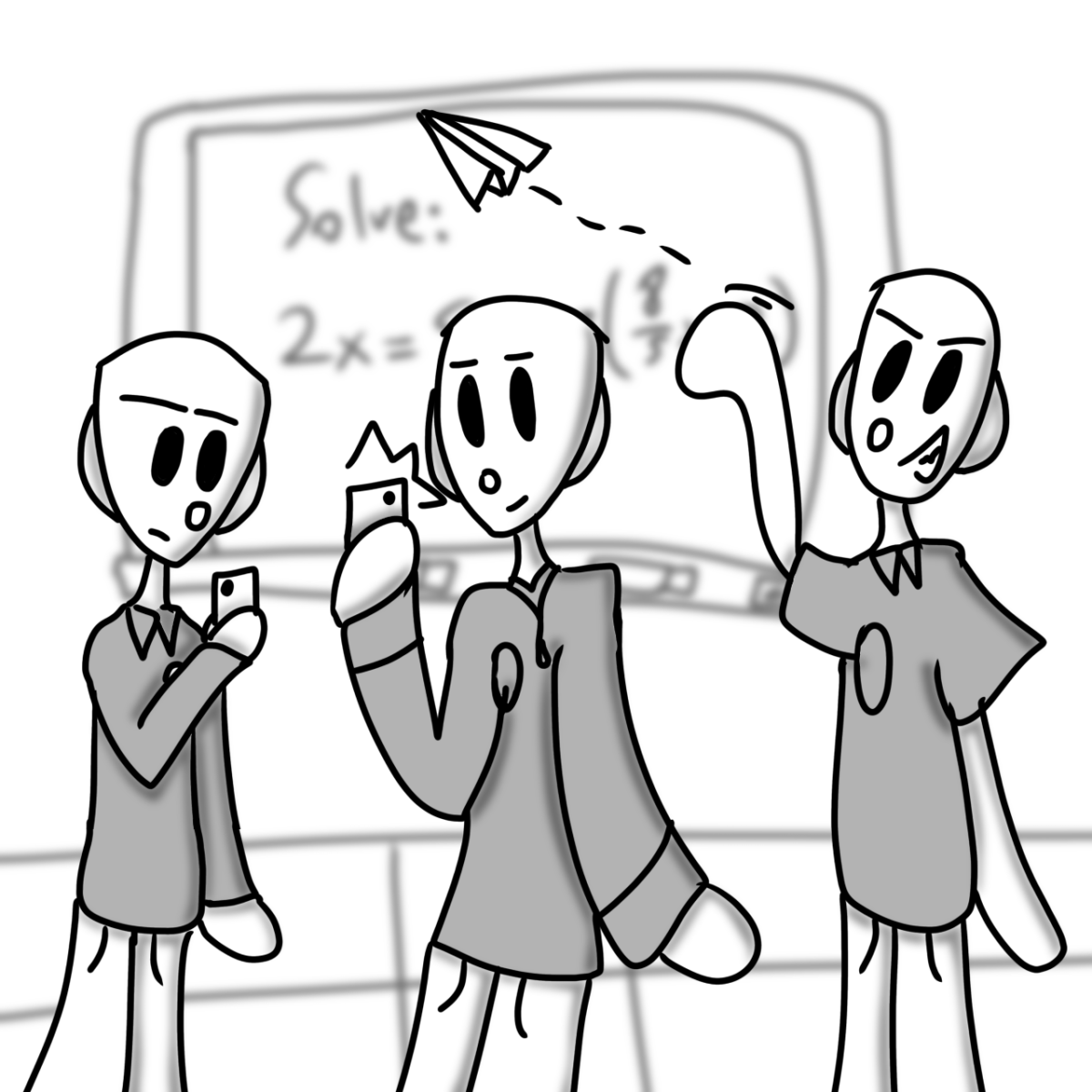
One of the largest factors contributing to the decline in student participation is undoubtedly the explosion of technology usage over the past half-decade. As everyone was confined to their homes without much to do, the internet and the host of social media apps it contained became an escape for many during the pandemic. Unfortunately, after the epidemic had mostly subsided, peoples’ newfound addictions to their electronic devices had not disappeared.
Mrs. Jennifer Kottra ’00, English teacher, had similar thoughts on the matter, stating that the recent boom in technology has resulted in “attention spans overall of kids—and adults—[diminishing].” Throughout the interview, Kottra expressed her adamant belief that, with the rise of social media and the integration of technology into so many facets of school life, people struggle more with staying focused in situations that require them to.
As for how technology has put a damper in maintaining adequate grades, an article from the University of Potomac states, “Students who rely too much on digital resources run the risk of not developing independent thinking and problem-solving skills.” With resources such as ChatGPT and Photomath, students are allowed to slack off while they allow AI to write entire paragraphs— or even essays—for them. By allowing themselves to be coddled by all of these methods in which they never lift a finger, students hinder their own ability to build skills that they will need to make use of on their own: skills that you cannot be spoon-fed by AI.
To find the next most prominent factor behind the decline in student participation and grades, one must look to the people who coach us through this active war-zone known as high school: the teachers. Our primary sources of wisdom and our guideposts for how to behave in the classroom, teachers have always been at the forefront of ensuring that everyone gets an equal opportunity at getting a proper education. However, with the drop in teacher pay over recent years, educators are being employed in a quantity-over-quality manner, meaning that more teachers are being hired for less money.
This same connection was made by math teacher Ms. Regan Smith, who said that even as a kid, a career in education was “viewed negatively because you were not going to get paid well.” This applies now more than ever, in a society where inflation rates are higher than ever before. Without a monetary incentive to keep them dedicated to one school for prolonged periods of time, fewer teachers are able to truly commit to giving students the best possible education.
This notion is voiced in a piece from TeacherTaskForce.org, which expresses the theory that “low salaries make it harder to attract new teachers and retain those already in the profession.” By forcing teachers to work off of nearly unlivable wages and expecting them to teach vastly growing numbers of students of varying ages, it simply becomes an insurmountable task to help every single kid thrive in school. So, to make up for what teachers are unable to provide for their students, it is up to the students to desire an education, and to put their own effort into making school an environment that encourages learning rather than one that uses peer pressure to scare kids away from participating with terminology like “try-hards” for those simply trying to learn.
In this day and age, in a society where technology has assimilated itself into so many areas of life, and where an inflated economy makes success feel like a pipe dream, it is important to remember how individuals can make a difference in their own lives. With all the resources that American children are privileged to have access with, it is important not to take them for granted, and to remember what really holds precedence in one’s life.