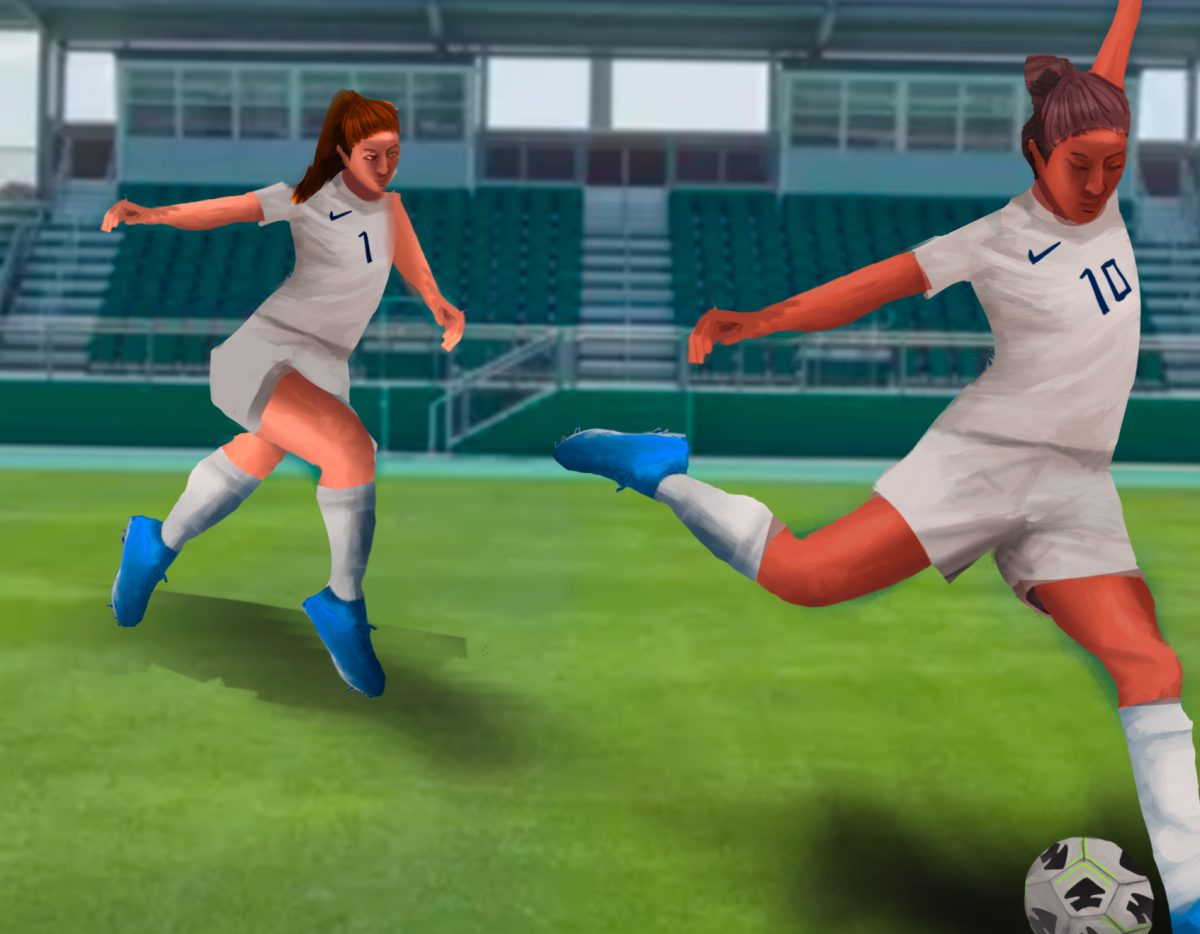


When a person is asked to name a list of sports, they tend to first name the four major professional sports in the country—football, baseball, basketball, and ice hockey. Then soccer might come to mind, depending on whether their city has a professional soccer team, and the thought of soccer brings up popular high school sports—volleyball, lacrosse, softball, and tennis. After remembering the popular high school sports, what about the less popular? The majority of high schools do have a golf, swimming, water polo, cross country, track and field, and bowling team. With all these activities falling into the realm of sports, why are they not the first thing in a person’s mind when answering this question?
The Oxford English Dictionary defines a sport as “an activity involving physical exertion and skill, especially one regulated by set rules or customs in which an individual or team competes against another or others.” Similarly, from a poll of 123 students from Saint Viator, 76.4% felt a sport must consist of physical exertion, and 67.5% felt it must include the end goal of winning or losing. While the definition and these statistics offer a more concrete definition of what a sport is, it doesn’t explain why one activity is considered more sports-like than another. Technically, running 10 yards and throwing a ball over an obstacle and into a basket faster than a friend fits this definition perfectly, yet this is an answer one will never receive when asking someone to name a list of sports.
“Being considered a sport isn’t always black and white,” said senior Kaela Swinton. “I think some activities clearly fit the ‘definition,’ but others can fall into gray areas depending on how people view them.” It is essential to define these gray areas, as many of these sports do fit the definition of a sport.
“Some people say cheer isn’t a ‘real sport,’” said Swinton, “I think it is because there is a lot of skill and physical activity involved. There are rules in competitions, but it’s more about creative expression than just sticking to a certain set of rules.” The difference in how the sport interacts with its rules is one of the ways to determine how a sport falls into a gray area. Cheer tends to involve a group of people working towards the same goal, which is often achieved by winning against other teams by scoring the most points. A good way to stand out in a judge’s mind is to have a unique routine, meaning the routine each team performs is often vastly different from the others. Comparing this creative expression to the creative expression needed for winning a game of hockey, it is basically nonexistent. The main goal of hockey is to bury the puck in the back of an opponent’s net. It doesn’t matter how this play happens. It just matters that it happens. This difference in creative expression is what lands sports like cheer, dance, gymnastics, and figure skating into the gray area of sports.
The other way a sport falls into the gray area is often dependent on how often a variation of a sport is treated as a fun thing to do after work or a fun activity for kids. These sports often involve things like bowling, swimming, golf, and cross country, and each of these sports requires a degree of physical activity to compete. Some people regard bowling as only a birthday party activity, but this is not the case. While it might be one of the most accessible sports, granted one lives near a bowling alley, the accessibility for it to be a birthday activity does not detract from it being a sport. It still requires skill, it still requires a set of rules, and physical exertion is more apparent in competitive bowling leagues. Similar to bowling, swimming can be seen as something fun for kids to do during the summer at the local swimming pool, and cross-country is no different than going on a morning jog before work. Since these sports are deemed to be more accessible than others, they, too, fall into the gray area of sports.
There is no hard and fast line between whether a single sport is a sport or not. Instead, there is a gray area encompassing the sports that are not as prominent, the sports that require creative expression, and the sports that are accessible for all ages.